Where materials become philosophy.
In Rashid Johnson’s Brooklyn studio, sculpture, painting, plants, books, and ceramics coexist within a constantly shifting environment. The space functions less as a traditional workshop and more as a living archive—an ecosystem where ideas accumulate through materials, gestures, and experimentation.
The studio sits inside an industrial building in Brooklyn, one of the many converted spaces that now house artists, designers, and small creative companies. From the outside it appears anonymous—a plain brick structure with large windows facing the street.
Inside, however, the atmosphere changes immediately.
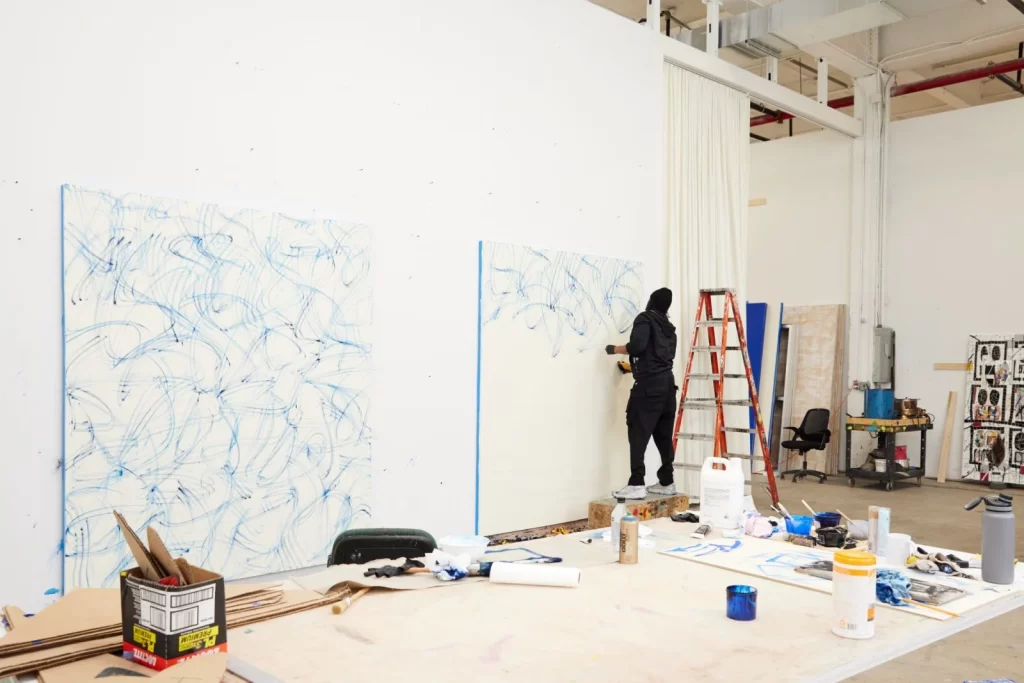
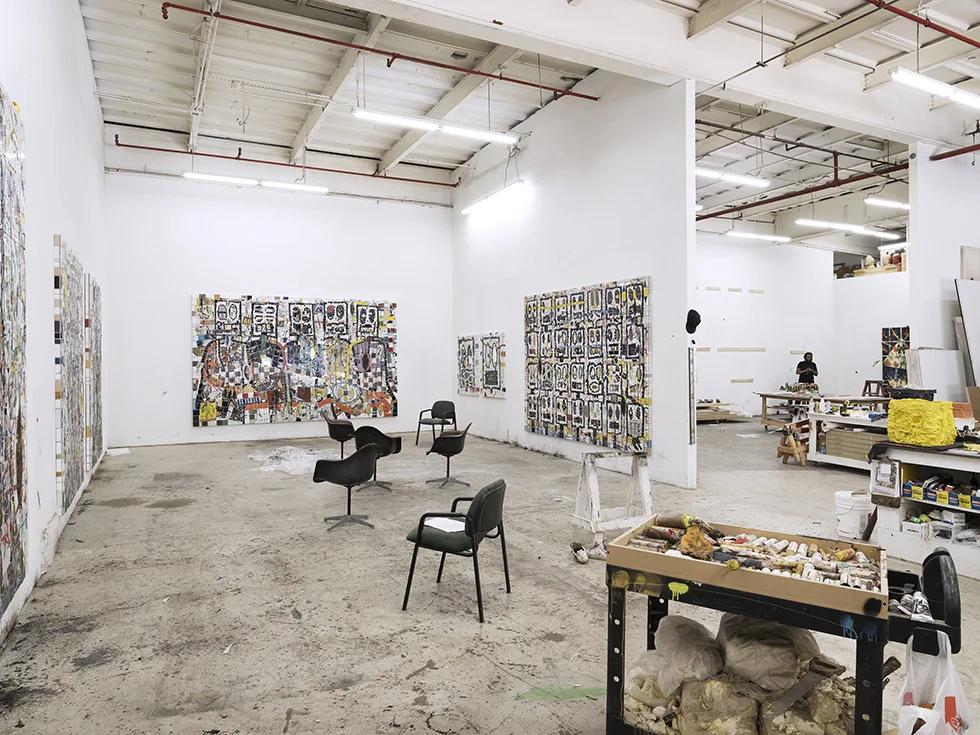
Rashid Johnson’s studio feels expansive yet intimate. Tall shelves line the walls, filled with books, ceramic vessels, tools, and fragments of previous projects. Plants occupy corners and windowsills. Sculptures stand quietly beside unfinished paintings.
Nothing appears static.
Johnson moves easily through the space, occasionally pausing to adjust an object or examine a surface more closely. The studio operates almost like a living organism. Materials circulate from one project to another. Experiments accumulate.
For visitors, the first impression is often the diversity of elements present in the room.
Johnson’s practice has always been interdisciplinary. Over the years he has moved fluidly between photography, sculpture, painting, installation, and video. Each medium introduces a new set of questions.
Yet certain materials appear repeatedly.
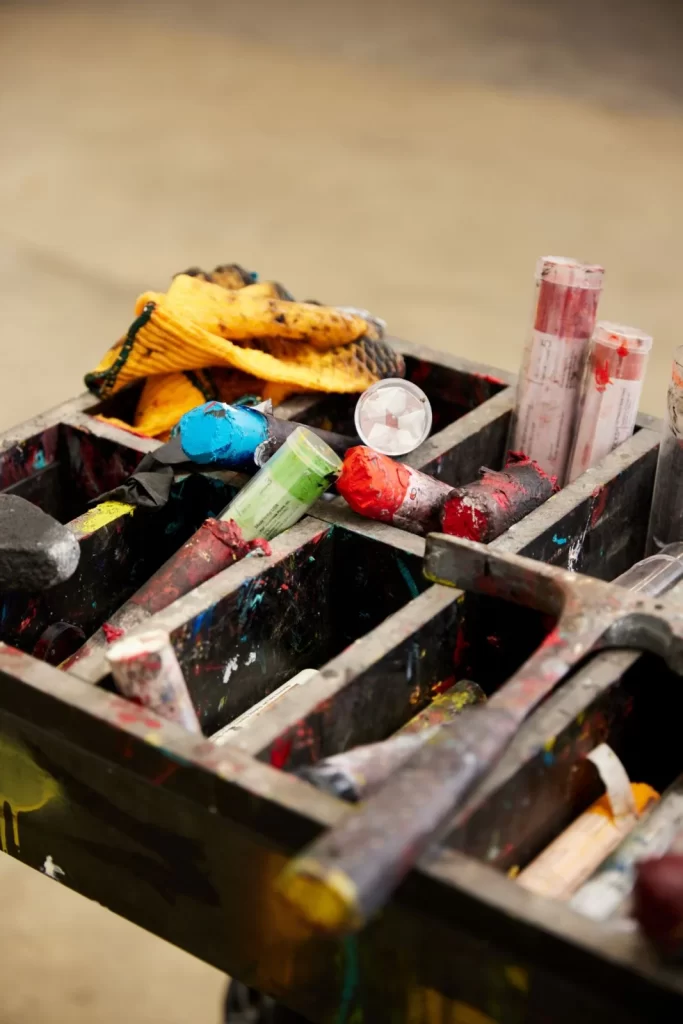
Black soap. Shea butter. Ceramic tile. Wood. Steel.
These substances carry cultural and historical associations that extend beyond their physical properties. Many originate from African or diasporic traditions. Others connect to domestic environments or architectural space.
Johnson speaks about them with deliberate clarity.
“Materials have memory,” he says.
That memory forms the starting point for many works.
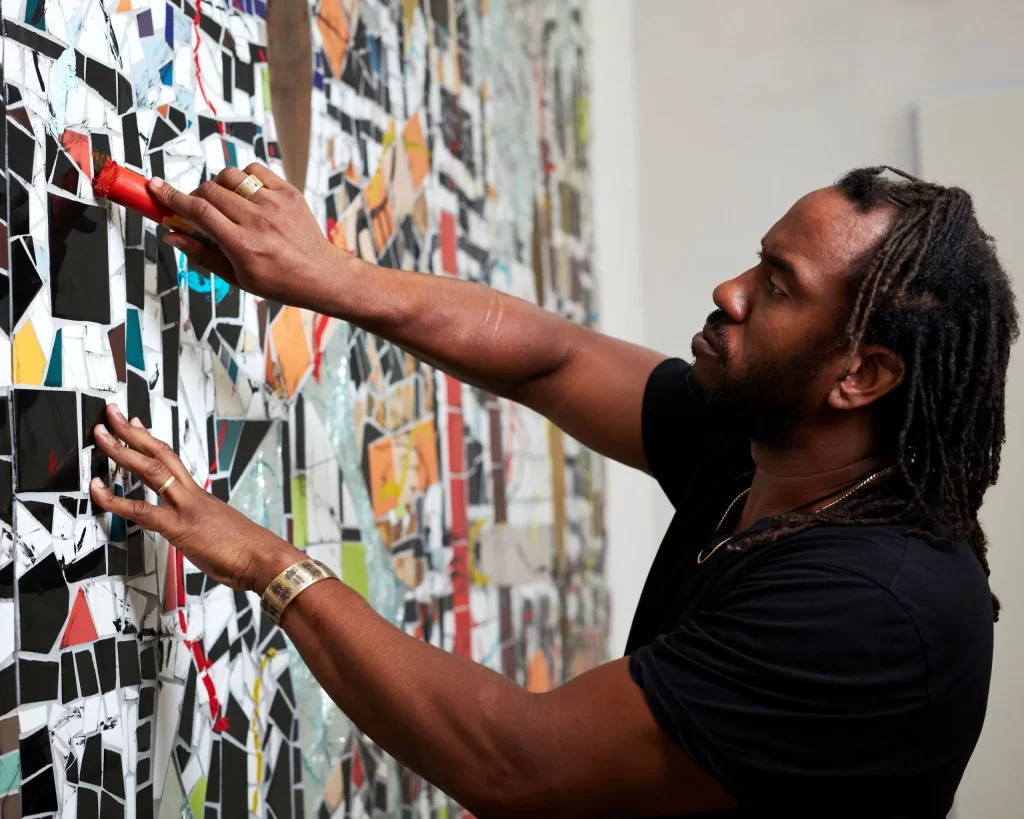
A table near the center of the studio holds several ceramic vessels in various stages of completion. Some are smooth and symmetrical. Others appear fractured, their surfaces intentionally irregular.
Johnson lifts one carefully.
“I like the idea that objects can feel both fragile and resilient at the same time.”
The vessel returns to the table.
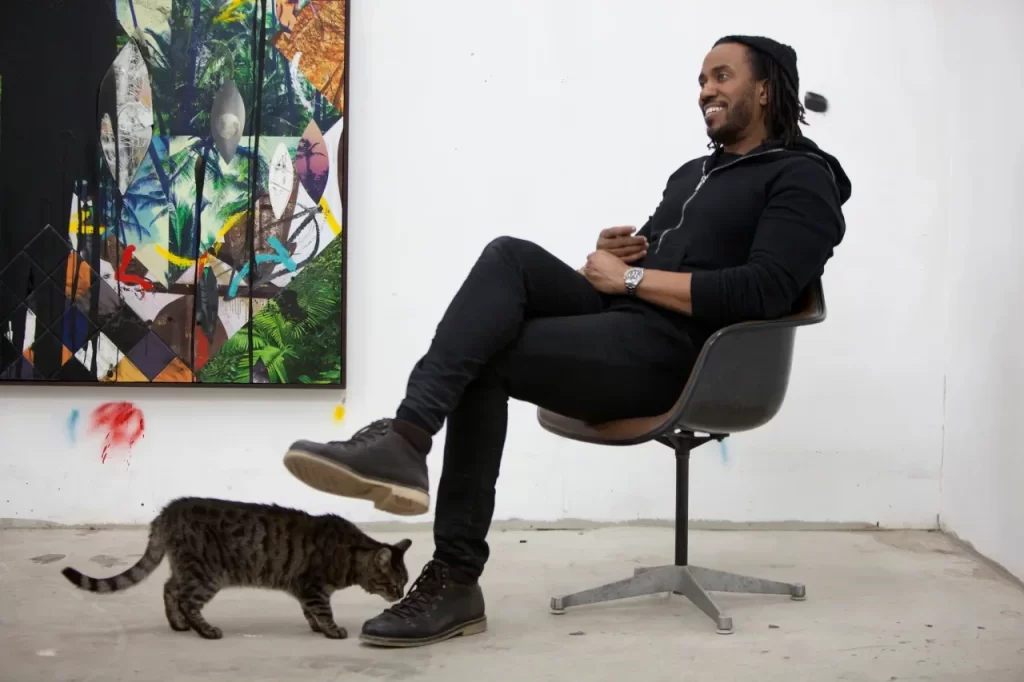
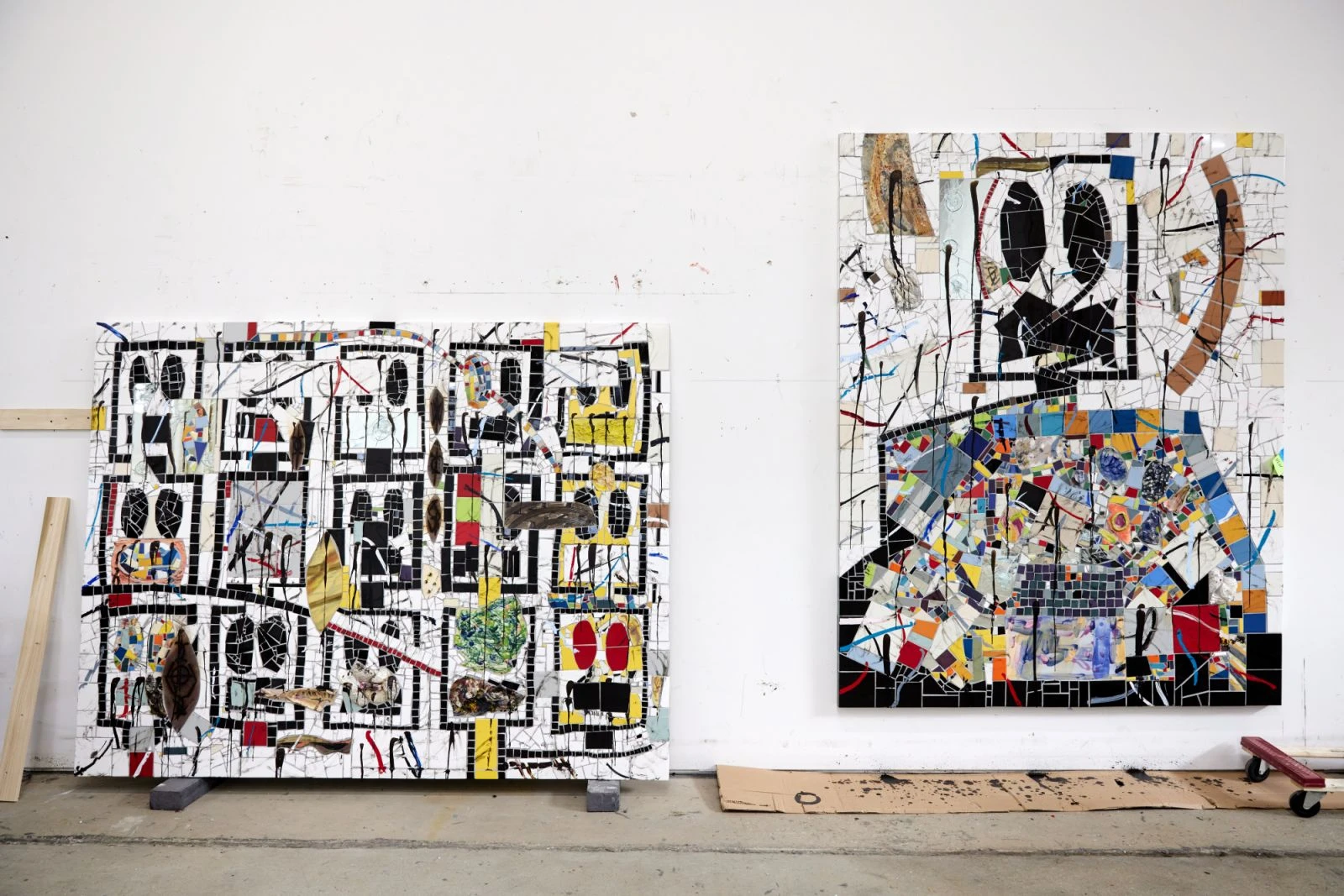
Across the room a series of large paintings lean against the wall. Their surfaces combine brushwork with embedded materials—tiles, wood, or mirror fragments that reflect the surrounding space.
The works feel architectural.
This quality is intentional. Johnson often thinks about his installations as environments rather than isolated objects. When exhibited together, paintings and sculptures create spatial relationships that influence how viewers move through the room.
The studio provides an early glimpse of that process.
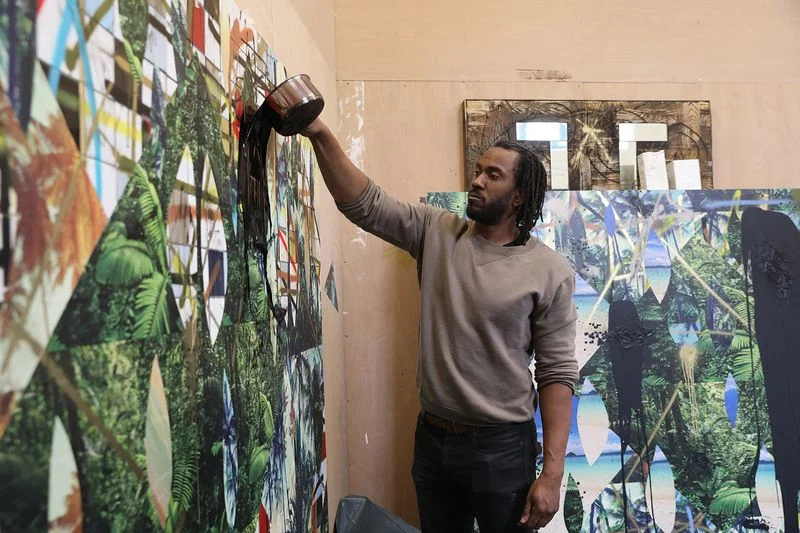
Assistants work quietly at nearby tables, preparing materials or organizing tools. The rhythm feels collaborative but focused.
Despite the scale of Johnson’s recent projects, the atmosphere remains remarkably calm.
Perhaps this reflects the philosophical dimension of his practice.
Throughout his career Johnson has explored themes of identity, history, and emotional experience. Rather than presenting direct narratives, his work often constructs environments that invite contemplation.
The presence of books throughout the studio reinforces this approach.
Stacks of volumes appear everywhere: philosophy, poetry, art history, cultural theory. Some are heavily marked with notes. Others remain open on worktables, as if temporarily paused mid-reading.
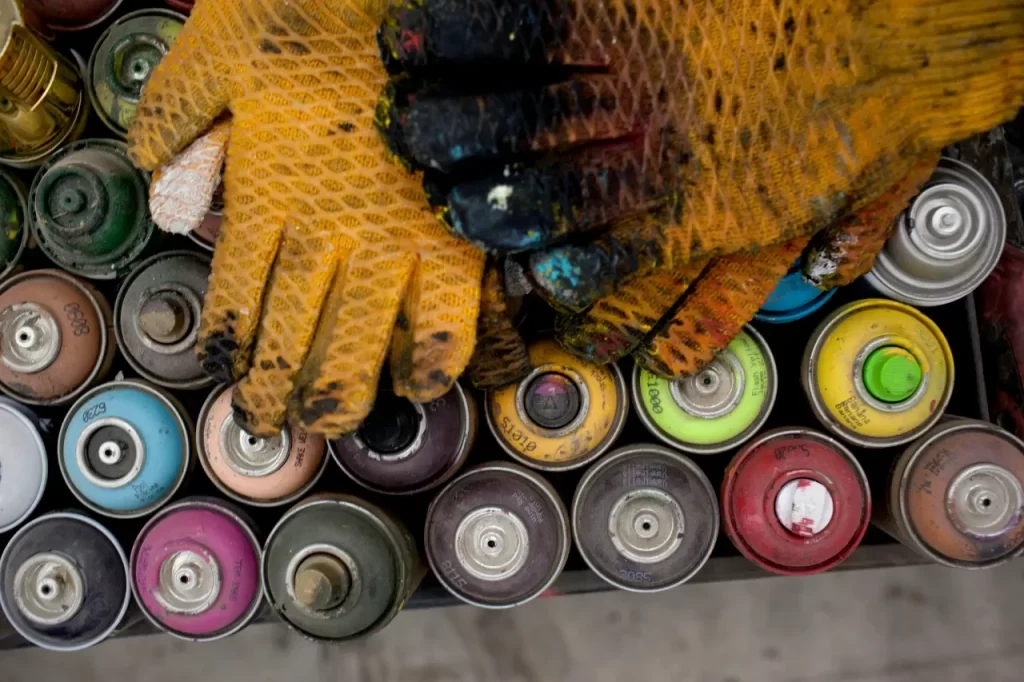
Ideas circulate through the space just as materials do.
At one point Johnson gestures toward a small arrangement of plants placed beside a sculpture.
“I like bringing living things into the studio,” he explains. “They change over time.”
That sense of change is fundamental.
Unlike traditional studios organized around a single medium, Johnson’s workspace encourages movement between different forms of making. A sculpture might lead to a painting. A drawing might evolve into an installation.
The boundaries remain flexible.
Walking through the studio becomes a way of tracing the artist’s thinking.
One corner contains several mirrored panels used in earlier installations. Another holds ceramic experiments that may later appear within larger sculptures.
Each object represents a moment in an ongoing conversation.
For Johnson, the studio is not simply a place where artworks are produced.
It is where questions remain open.
By the time the visit ends, the afternoon light has shifted across the room. Reflections from mirrored surfaces create subtle patterns on the floor.
Johnson pauses near the doorway.
“There’s always another version of the work waiting to happen,” he says.
In a space built around experimentation, that possibility remains constant.